
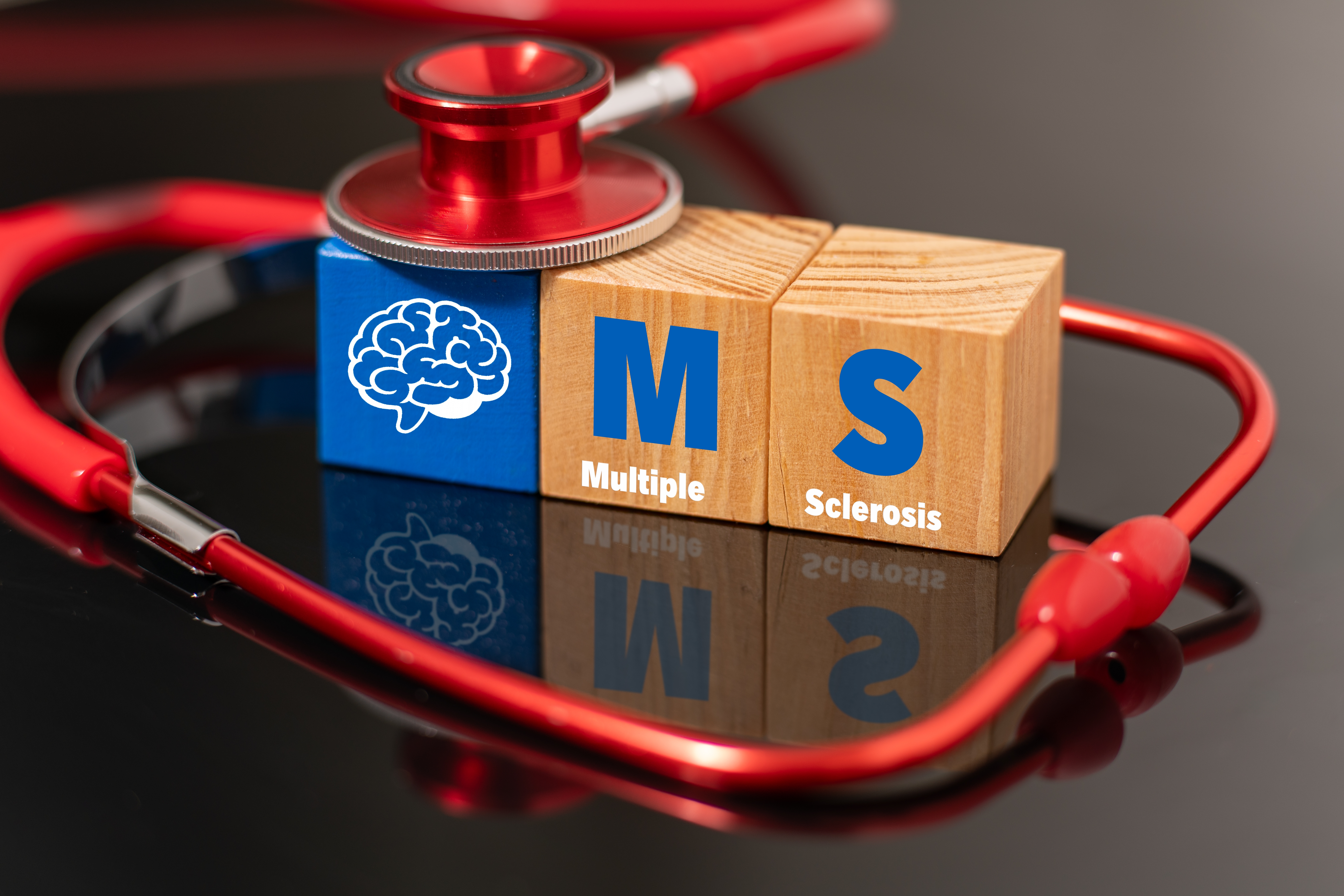
For many people, an MS diagnosis begins long before the words “multiple sclerosis” are spoken.
It may start with blurred vision, numbness, fatigue, weakness, balance problems, or symptoms that appear, disappear and return without an obvious explanation. For some, the road to diagnosis is relatively short. For others, it can involve months of uncertainty, GP appointments, neurology referrals, MRI scans, blood tests, lumbar punctures and anxious waiting.
This World MS Day, 30 May 2026, the global campaign theme “My MS Diagnosis” is especially relevant in Ireland. MS Ireland is marking the day through “MS Journeys: Many Faces, One Community”, highlighting the lived experiences of people across the country and the shared strength of the MS community (1,2).
That focus matters. More than 10,000 people are living with MS in Ireland, which equates to over 183.2 cases per 100,000 people (3). This is greater than the MS prevalence in Europe calculated at 142.8 cases per 100,000 people (4).
MS remains one of the most common disabling neurological conditions affecting young adults in the country. Behind every number is a person looking for clarity, support and a way forward.
Why Multiple Sclerosis Diagnosis Matters
MS is a chronic and unpredictable condition of the brain, spinal cord and optic nerves. It occurs when the immune system mistakenly damages myelin, the protective coating around nerve fibres, disrupting messages between the brain and body (5).
MS is complex. It affects the central nervous system and can present differently from one person to another. Some symptoms are visible, such as mobility changes. Others, including fatigue, altered sensation, memory and concentration difficulties, may be hidden and harder to explain (5).
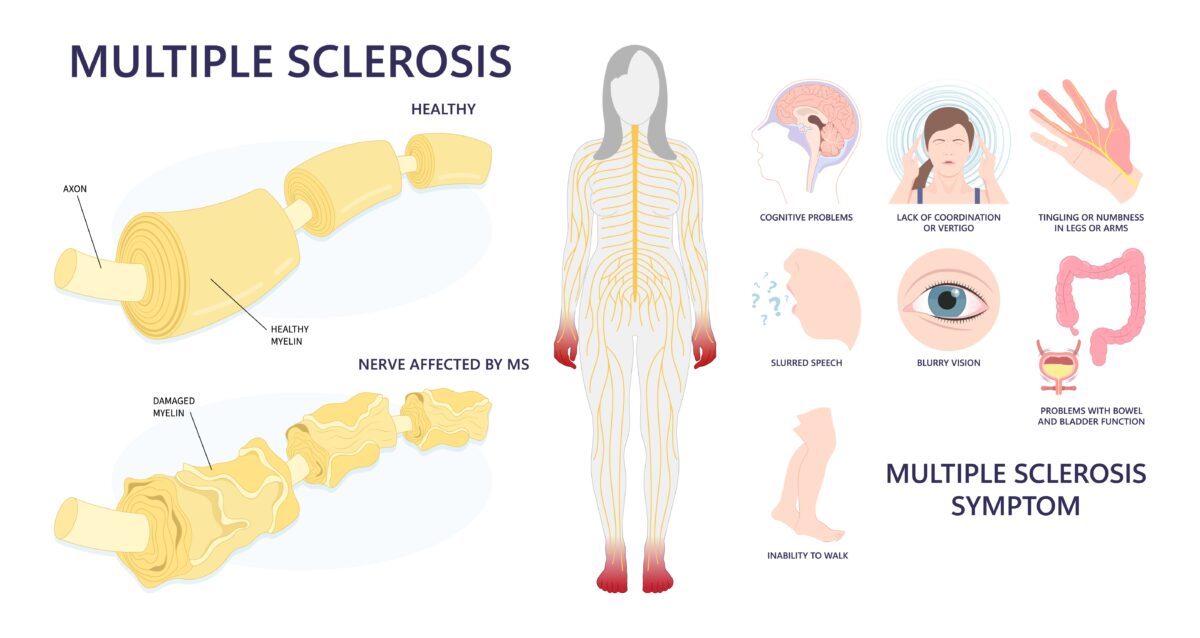
Understanding Multiple Sclerosis and Diagnostic Challenges
There is no single test that diagnoses MS on its own. Instead, clinicians build the picture through symptoms, neurological examination, MRI findings, laboratory investigations and exclusion of other possible causes. The 2017 McDonald criteria support diagnosis by looking for evidence of disease activity separated in time and space, while ensuring there is no better explanation for the person’s symptoms (6). In that diagnostic pathway, cerebrospinal fluid, or CSF, can provide valuable supportive evidence.
The Role of CSF Oligoclonal Bands in Multiple Sclerosis Diagnosis
CSF surrounds the brain and spinal cord, making it an important sample when investigating conditions affecting the central nervous system. One key laboratory finding in suspected MS is the presence of oligoclonal IgG bands.
These bands can indicate intrathecal IgG synthesis, meaning immune activity within the central nervous system. The principle is based on comparing the patient’s CSF with their serum. If IgG bands are present in CSF but absent from the paired serum sample, this supports local immune activity. In practice, two or more CSF-restricted IgG bands are generally considered dependable supportive evidence of local intrathecal IgG synthesis.
CSF oligoclonal bands do not diagnose MS in isolation. They must be interpreted alongside clinical findings, MRI and the exclusion of alternative diagnoses. However, the 2017 McDonald criteria restored an important role for CSF oligoclonal bands in supporting diagnosis in certain patients with a typical clinically isolated syndrome (6,7).
- For patients, that can mean moving closer to an answer.
- For clinicians, it can strengthen the diagnostic picture.
- For laboratories, it makes test quality and interpretation essential.
Why CSF Isofocusing Matters for Accurate MS Testing
Detecting oligoclonal IgG bands requires a method with high resolution and clear CSF/serum comparison. Isoelectric focusing, or IEF, separates proteins according to their isoelectric points and is used to identify subtle IgG banding patterns.
IEF uses a pH gradient to separate proteins according to charge, allowing high-resolution analysis in the gamma region.
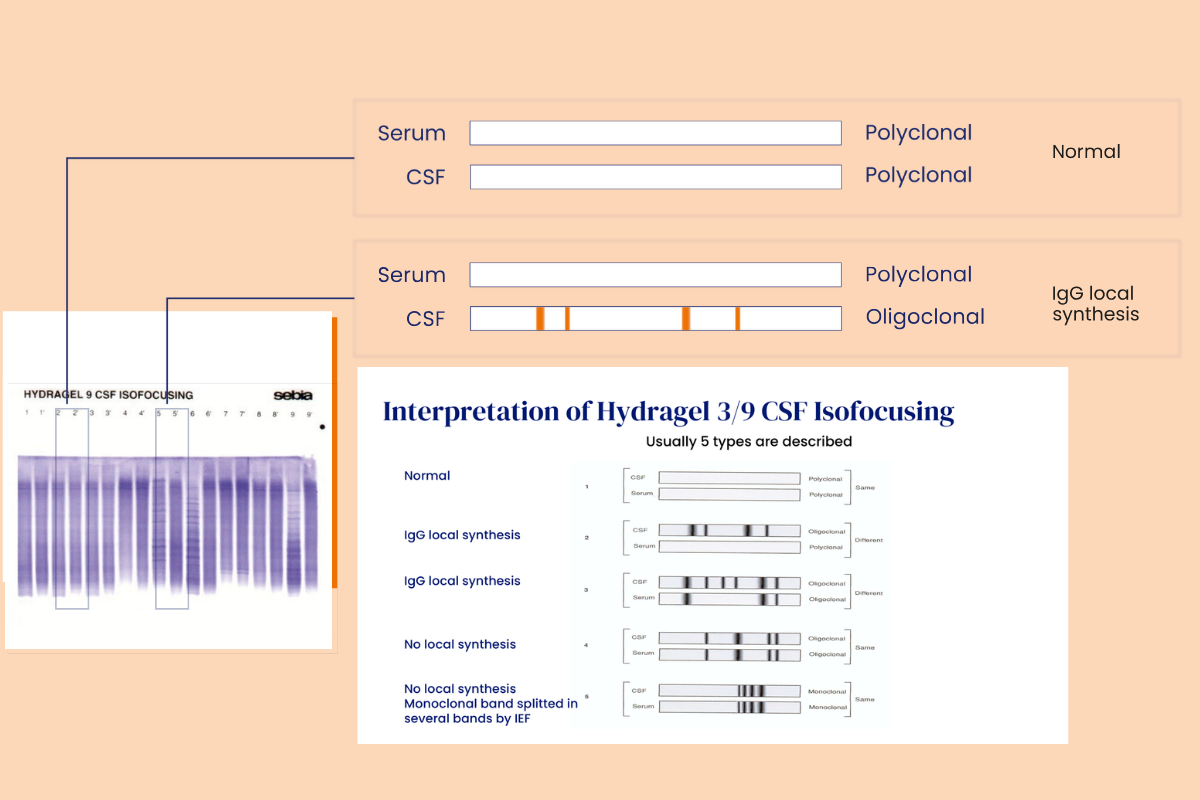
In practice, interpretation depends on recognising patterns. CSF-restricted bands may support local synthesis, while identical bands in CSF and serum suggest a systemic immune response rather than intrathecal synthesis. Commonly used interpretation patterns include Type 2 and Type 3 profiles, which support local intrathecal synthesis, and Type 4 profiles, where the same bands appear in serum and CSF and therefore do not support local synthesis.
This is why clarity matters. A CSF oligoclonal band result is not just a laboratory image; it is part of a clinical decision that may affect someone’s future care.
Sebia Hydrasys 2 Scan for CSF Isofocusing in Irish Laboratories
The Sebia Hydrasys 2 Scan CSF isofocusing workflow combines isoelectric focusing with direct immunodetection on the gel. The workflow supports analysis of unconcentrated CSF, and allows paired CSF and serum comparison. It can analyse 3 or 9 CSF/serum pairs simultaneously and detect an IgG band as low as 0.31 mg/L (8). The total procedure time is approximately 2 hours 30 minutes.
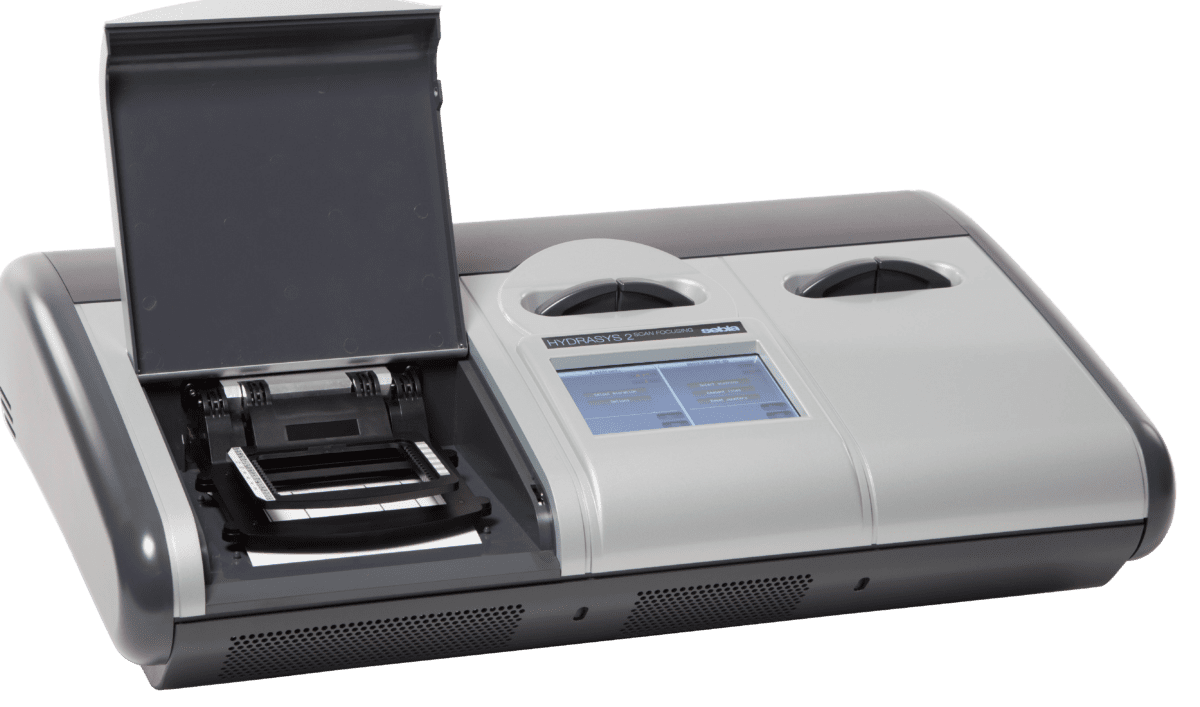
For Irish laboratories supporting neurology services, CSF oligoclonal band testing needs to be reliable, efficient and clear to interpret.
For laboratories, this supports high-resolution IgG band detection, matched CSF and serum comparison, a structured workflow for multiple patient pairs, and clearer support for oligoclonal band interpretation.
Hydrasys 2 Scan Focusing should not be positioned as “diagnosing MS” on its own. Rather, it supports laboratories in delivering high-quality CSF isofocusing results that contribute to the wider diagnostic pathway.
Supporting Earlier Multiple Sclerosis Diagnosis in Ireland
World MS Day is a reminder that diagnosis is both clinical and personal.
Across Ireland, people living with MS, their families, neurologists, nurses, medical scientists and patient organisations all play a part in improving the journey from symptoms to answers. Earlier and more accurate diagnosis depends on awareness, access, expertise and reliable diagnostic tools.
CSF isofocusing is one part of that pathway. Technologies such as Hydrasys 2 Scan Focusing can help laboratories provide the clarity clinicians need and the answers patients are waiting for.
This World MS Day, as Ireland shares the many faces of MS, the message is simple: diagnosis matters, and no one should have to navigate it alone.
Get In Touch
References
- MS Ireland (2026a) World MS Day 2026. Available at: https://www.ms-society.ie/world-ms-day-2026
- MS Ireland (2026b) World MS Day 2026: Many Faces, One Community. Available at: https://www.ms-society.ie/news/world-ms-day-2026-many-faces-one-community
- MS Ireland (2018) Multiple Sclerosis: The Facts. Available at: https://www.ms-society.ie/news/multiple-sclerosis-facts
- Walton, C. et al. (2020) ‘Rising prevalence of multiple sclerosis worldwide: insights from the Atlas of MS, third edition’, Multiple Sclerosis Journal, 26, pp. 1816–1821.
- Cleveland Clinic (2024) Multiple Sclerosis (MS): What It Is, Symptoms & Treatment. Available at: https://my.clevelandclinic.org/health/diseases/17248-multiple-sclerosis
- Thompson, A.J. et al. (2018) ‘Diagnosis of multiple sclerosis: 2017 revisions of the McDonald criteria’, The Lancet Neurology, 17(2), pp. 162–173.
- Mantero, V., Abate, L., Balgera, R., La Mantia, L. and Salmaggi, A. (2018) ‘Clinical application of 2017 McDonald diagnostic criteria for multiple sclerosis’, Journal of Clinical Neurology, 14(3), pp. 387–392.
- Sebia (n.d.) CNS Local IgG synthesis detection by isoelectrofocusing. Available at: https://www.sebia.com/en-uk/tests/cns-local-igg-synthesis-detection-by-isoelectrofocusing/