

Behind Every Transplant, There Is a Laboratory
Every organ transplant begins with an act of extraordinary generosity. A donor, or a donor’s family, makes a decision in the most difficult of circumstances that gives someone else a second chance at life. In 2024, 263 transplants took place in Ireland – 175 kidneys, 40 livers, 13 lungs, 9 hearts, and 4 pancreata – each one made possible by the selflessness of 84 deceased donors and 30 living donors and their families.
Organ Donor Awareness Week 2026, which ran from 16th to 23rd May and was organised by the Irish Kidney Association in association with the HSE’s Organ Donation Transplant Ireland, has just concluded. We wanted to mark it by celebrating one part of the transplant pathway that rarely gets the recognition it deserves: the blood bank laboratory. And to share a milestone that we at MSC are particularly proud of.
“Each year our organ donors, both living and deceased, continue to embody the best of humanity by giving the ultimate gift of life.”
Dr Catherine Motherway, HSE Organ Donation Transplant Ireland
The Work That Makes Every Transplant Safe
When a donor organ becomes available, time is critical. While surgical teams mobilise, the blood bank laboratory is already running compatibility tests that determine whether the transplant can safely proceed. This work is quiet, precise, and largely invisible to patients and the public. But without it, no transplant can safely take place.
Those tests include:
- ABO and RhD blood group typing – donor and recipient must be compatible; an ABO-incompatible transplant carries a high risk of life-threatening rejection
- Antibody screening and identification – the recipient’s blood is tested for antibodies that could attack the donor organ
- Crossmatch testing – antibody levels must fall within a safe threshold before transplant can proceed
- Direct Antiglobulin Test (DAT) – post-transplant monitoring for signs of rejection; a positive result is an early warning that requires immediate clinical attention
Each of these tests demands accuracy and speed. Behind every successful transplant, there is a team of medical scientists who delivered both.
How MSC and Werfen Support This Work
MSC is the Irish distributor for Werfen’s immunohaematology portfolio – supplying both the analysers and the full range of reagents, anti-sera, and Capture® reagent systems that blood bank laboratories across Ireland depend on every day.
Werfen’s platforms automate the patented Capture® technology – a solid phase, IgG-specific method for the detection and identification of clinically significant antibodies to erythrocyte antigens, with more than 40 years of clinical use and thousands of instrument placements globally. Two platforms are central to this work:
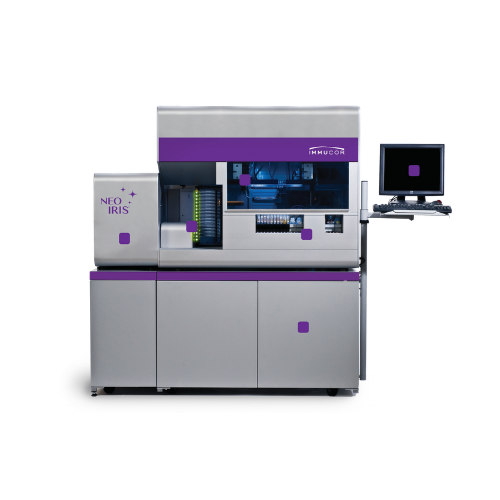
Neo Iris
Werfen’s sixth-generation flagship blood bank analyser, the Neo Iris delivers the highest type and screen throughput on the market with dynamic workflow management and STAT prioritisation – critical when a transplant window is time-limited. It is designed for donor centres and high-volume patient laboratories.
During Organ Donor Awareness Week 2026, and in a moment that feels particularly fitting, MSC marked the completion of a major project at the Northern Ireland Blood Transfusion Service (NIBTS). Four new Neo Iris analysers have now been installed and commissioned, upgrading the service from its previous generation Neo systems – with the final two instruments going live officially on Thursday 21st May.
NIBTS provides blood grouping, compatibility testing, and transfusion support for the whole of Northern Ireland – processing in the region of 158,000 blood grouping and antibody screening tests across donors and patients every year. That is the scale of the service the Automated Serology Laboratory team at NIBTS delivers, day in and day out.
Projects of this scale are never straightforward. This one was no exception -it required patience, problem-solving, and a shared commitment from both teams to get it across the line. The determination and professionalism of the NIBTS Automated Serology Laboratory team throughout this process was exceptional. It was their knowledge, their flexibility, and their willingness to work through the challenges that made this project possible. We are grateful for the trust they placed in us, and proud to have supported them through it.
The Neo Iris is deployed across more than 25 blood transfusion sites throughout the United Kingdom – a reflection of the platform’s established reputation in high-volume transfusion medicine.
Echo Lumena
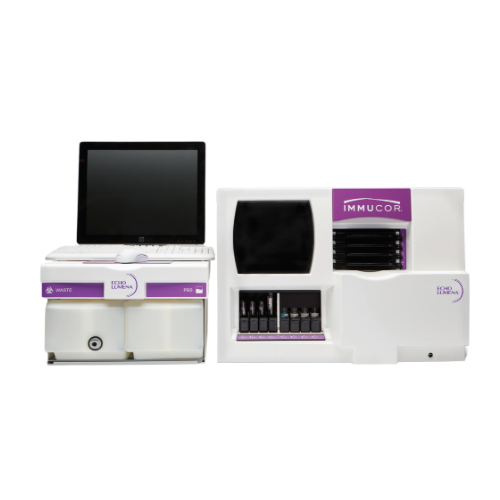
For smaller and mid-sized laboratories, the Echo Lumena delivers the fastest fully automated type and screen on the market today, with the world’s smallest footprint. It is suited to standalone operation or as a back-up system alongside the Neo Iris, with STAT functionality and true continuous sample access.
A Tribute to the People Behind the Results
The medical scientists staffing blood banks across Ireland and Northern Ireland – often in the middle of the night, without recognition – are responsible for one of the most consequential steps in the transplant pathway. Every result they issue with confidence is a step closer to a patient receiving the organ they need. We are proud to support them with instrumentation and reagents they can rely on.
Organ Donor Awareness Week may have concluded, but the conversation about donation should not end with it. We recognise the donors, their families, and every member of the clinical team – seen and unseen – who makes transplantation possible, not just this week but every week.
If you would like to find out more about the Neo Iris or Echo Lumena, please reach out to our product specialists below.
Get In Touch
References
Statistical sources: HSE Organ Donation Transplant Ireland (December 2024).